
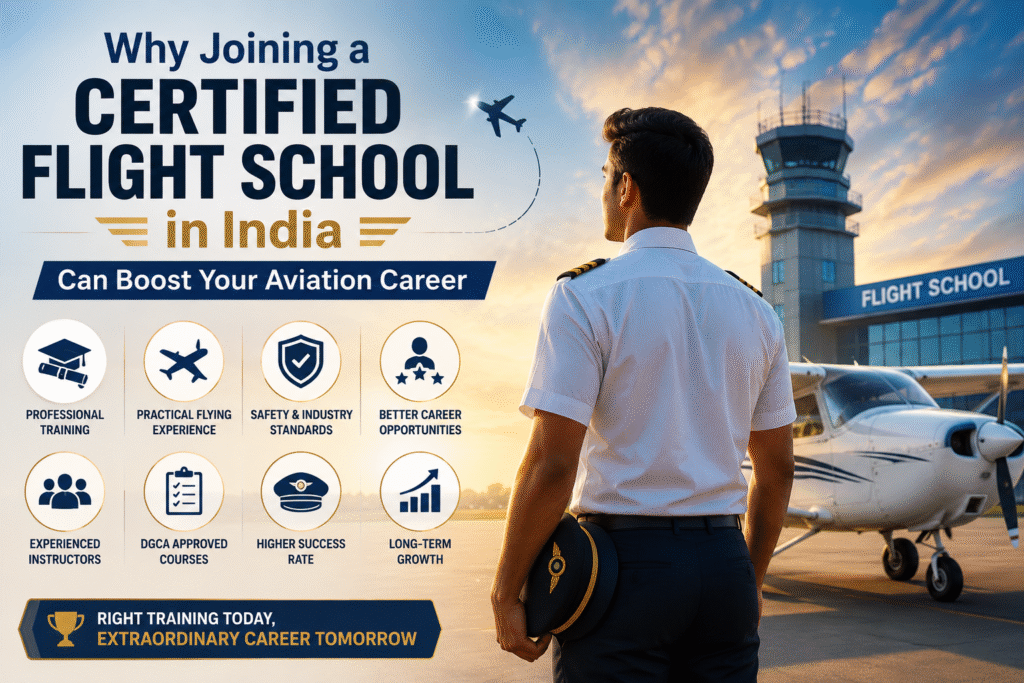
The aviation industry continues to create exciting career opportunities for aspiring pilots and aviation professionals. As air travel demand increases across India and around the world, airlines are looking for highly trained and qualified pilots who can meet industry standards. One of the most important decisions for any aspiring pilot is selecting the right Flight school in India. A certified flight school provides structured training, experienced instructors, modern facilities, and recognized certifications that can significantly improve career prospects.
Choosing a certified aviation training institution is not just about obtaining a pilot license. It is about building the knowledge, skills, and confidence required to succeed in a highly competitive aviation industry. Students who receive quality training often have a stronger foundation for professional growth and long-term career success.
Importance of Choosing a Certified Flight School in India
A certified flight school operates under approved aviation regulations and follows industry-recognized training standards. These standards ensure that students receive consistent and high-quality education throughout their training journey.
Certification demonstrates that the school meets specific requirements related to safety, training quality, instructor qualifications, aircraft maintenance, and operational procedures. This creates a professional learning environment where students can focus on developing their aviation skills with confidence.
Employers and airlines also value candidates who have completed training from recognized institutions because it reflects a commitment to quality education and industry best practices.
Access to Professional Flight Training Programs
One of the key advantages of joining a certified Flight school in India is access to structured flight training programs. These programs are carefully designed to help students progress from aviation fundamentals to advanced flight operations.
Training generally includes:
Ground school instruction
Flight simulator sessions
Practical flight training
Navigation and communication procedures
Aviation regulations and safety standards
Emergency response training
A well-designed training program ensures that students gain both theoretical knowledge and practical experience, preparing them for real-world aviation challenges.
Experienced Instructors Make a Difference
The quality of instructors plays a major role in aviation training. Certified flight schools typically employ experienced instructors who have extensive aviation knowledge and practical flying experience.
Professional instructors help students understand complex aviation concepts, improve decision-making abilities, and develop safe flying habits. Their guidance can accelerate learning and help students build confidence throughout the training process.
Students also benefit from personalized feedback that helps identify strengths and areas for improvement.
Better Safety Standards and Training Environment
Safety remains one of the most important aspects of aviation education. Certified institutions follow strict operational and safety procedures designed to protect students and maintain training quality.
Students learn:
Risk assessment techniques
Aviation safety protocols
Aircraft handling procedures
Emergency preparedness
Weather analysis and flight planning
Developing strong safety awareness early in training can contribute significantly to future career success as a professional pilot.
Modern Aircraft and Training Facilities
Training quality often depends on the facilities and equipment available to students. Certified aviation schools generally invest in well-maintained aircraft, advanced simulators, and modern training resources.
Access to updated training technology helps students become familiar with aviation systems used throughout the industry. Practical exposure to modern equipment can improve learning efficiency and better prepare students for commercial aviation careers.
Many aspiring pilots searching for the Best Flight school in India often evaluate factors such as aircraft availability, simulator technology, instructor quality, and training infrastructure before making a decision.
Strong Career Opportunities After Training
Completing training at a recognized institution can strengthen a student’s aviation profile. Airlines and aviation employers often prefer candidates who have completed professional training programs that meet established industry standards.
A certified training background can support career opportunities in:
Commercial aviation
Airline operations
Charter services
Cargo aviation
Flight instruction
Corporate aviation
The aviation industry values discipline, professionalism, and technical competence, all of which are developed through quality training programs.
Building Confidence for a Successful Aviation Career
Pilot training involves more than learning how to operate an aircraft. Students must also develop confidence, communication skills, leadership abilities, and sound judgment.
A structured learning environment allows students to practice critical thinking and decision-making under various flight conditions. These skills are essential for handling real-world aviation responsibilities and advancing professionally.
Many students searching for the Best Flight Training In India focus on institutions that provide comprehensive learning experiences that combine technical education with personal development.
Why Training Quality Matters
The aviation industry continues to evolve with new technologies, regulations, and operational requirements. Quality training helps students stay prepared for industry expectations and future career growth.
Choosing the right training institution can influence:
Skill development
Licensing success
Employment opportunities
Professional confidence
Long-term aviation career advancement
Investing in quality aviation education today can create valuable opportunities for years to come.
Flight School in India: Why Joining a Certified Academy Can Boost Your Aviation Career
Joining a certified Flight school in India can provide aspiring pilots with the knowledge, practical experience, safety awareness, and professional skills needed for a successful aviation career. From experienced instructors and modern training facilities to structured learning programs and industry-recognized certifications, quality training plays an important role in career development.
For students seeking a strong foundation in aviation and professional pilot training, CEA Aviation is committed to supporting future aviation professionals through quality education, practical training, and industry-focused learning opportunities.
A certified Flight School in India follows approved training standards, helping students gain aviation skills, safety knowledge, and career readiness.
A Flight School in India provides structured training, experienced instructors, practical flying experience, and preparation for professional aviation careers.
Compare certification, instructor experience, aircraft availability, training facilities, safety standards, and student support before selecting a school.
Yes, recognized flight training improves aviation knowledge, practical skills, and employability for airline, charter, and commercial pilot positions.
Most schools provide ground training, simulator sessions, flight instruction, navigation education, safety training, and pilot licensing programs.
Yes, professional flight training develops technical knowledge, flying experience, and industry skills required for commercial aviation careers.

