
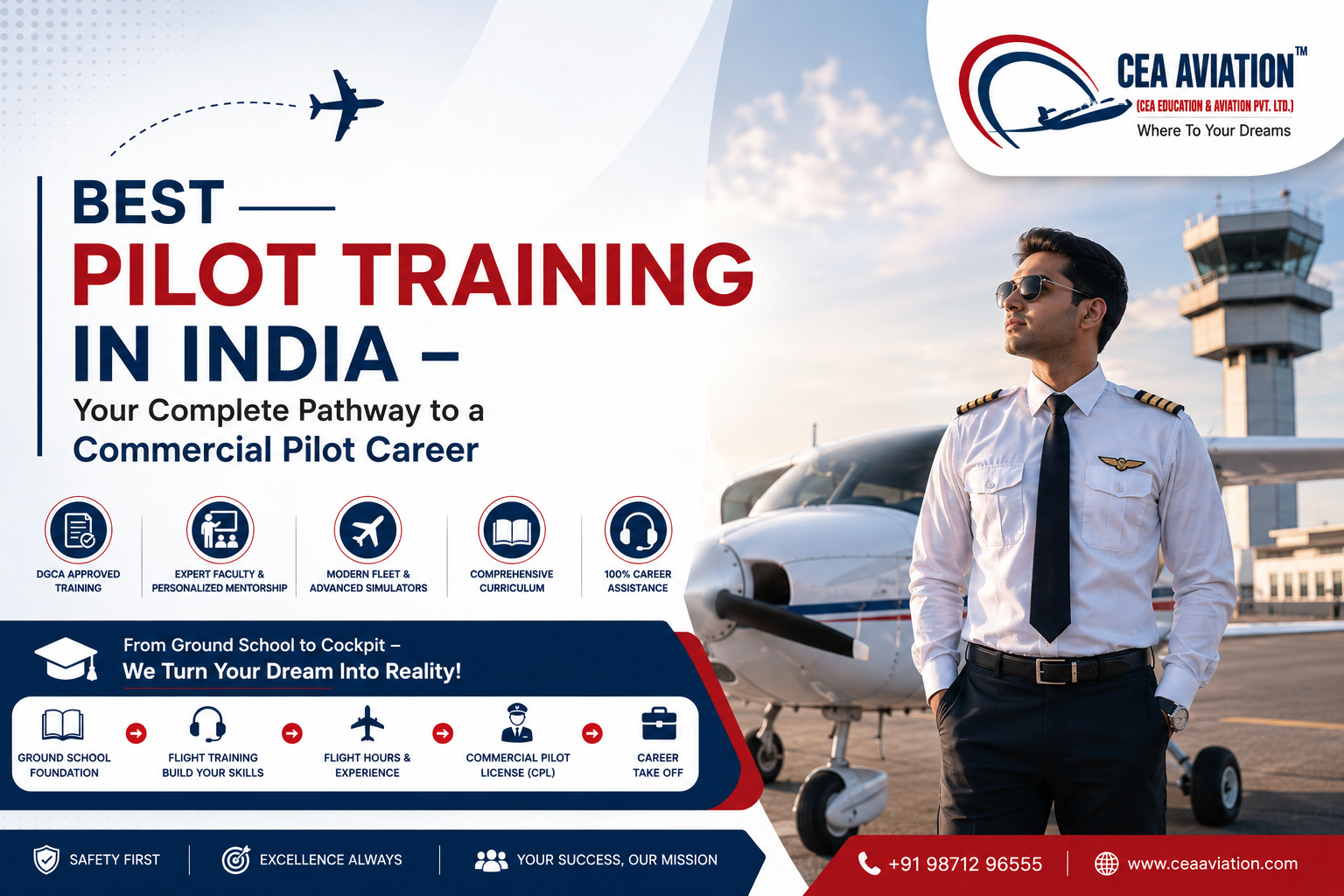
Building a successful aviation career starts with choosing the Best Pilot Training in India. Indeed, for aspiring pilots, proper guidance, DGCA-focused preparation, and structured aviation education are essential for achieving genuine long-term success in the aviation industry — not just a passed exam.
India’s aviation sector is expanding rapidly, creating strong opportunities for students who want to become commercial pilots. As a result, modern airlines and aviation companies are seeking highly trained professionals with strong technical knowledge, flight discipline, and aviation awareness. This is exactly why selecting the right aviation institute matters more today than ever before.
CEA Aviation helps aspiring pilots prepare for aviation careers through professional mentorship, DGCA guidance, and industry-oriented learning support designed specifically for future airline professionals.
Why Aviation Is Becoming a High-Growth Career in India
India’s aviation industry continues to grow steadily because of increasing domestic travel demand, airline expansion, and airport development across the country. Consequently, this growth is directly creating rising demand for professionally trained pilots – a trend expected to continue for years.
Students today are actively searching for Pilot Training in India that offers strong academic preparation, genuine aviation mentorship, and a clear pathway toward Commercial Pilot License (CPL) success, rather than a generic, one-size-fits-all program.
Beyond that, professional pilot preparation doesn’t just improve technical knowledge – it also develops confidence, decision-making ability, communication skills, and the operational discipline genuinely required inside the cockpit.
Understanding the Pathway to Become a Commercial Pilot
Aviation training is a step-by-step process that combines theoretical aviation education with practical flight preparation. Students gradually progress from aviation fundamentals to advanced operational understanding through carefully structured learning modules.
The pilot training journey in India generally includes:
- Aviation theory preparation
- DGCA examination guidance
- Flight simulator familiarity
- Flight operation understanding
- Aircraft systems learning
- Navigation and meteorology training
- Practical flight exposure
Overall, this structured approach helps aspiring pilots prepare genuinely for professional aviation environments and real airline career opportunities, not just for a single licensing exam.
Preparing for Commercial Pilot Training
Students pursuing professional aviation careers need advanced, CPL-focused preparation that aligns with DGCA standards and modern airline expectations. Once students have a strong grounding here, many progress toward dedicated Commercial Pilot Training in India, which focuses specifically on:
- DGCA-oriented syllabus preparation
- Aviation safety understanding
- Navigation and flight planning
- Aircraft operational procedures
- Radio telephony communication
- Aviation regulations and technical subjects
- Professional aviation discipline
Therefore, strong academic preparation during the early stages of training significantly improves long-term career growth opportunities for aspiring pilots later on — cutting corners here tends to catch up with students during real airline assessments.
Important Skills Every Pilot Must Develop
A successful pilot needs much more than flying knowledge alone. Aviation professionals must develop multiple technical and personal skills throughout their entire training journey, not just during ground school.
Essential pilot skills include:
- Situational awareness
- Communication abilities
- Decision-making under pressure
- Flight discipline
- Technical understanding
- A problem-solving mindset
- Leadership and teamwork
In turn, professional aviation institutes help students gradually build these skills through structured mentorship and genuinely aviation-focused learning environments, rather than expecting these qualities to develop on their own.
DGCA Preparation and Aviation Guidance
DGCA examinations represent one of the most important stages in becoming a professional pilot in India. Students need proper preparation strategies, genuine conceptual clarity, and structured guidance to perform successfully — memorization alone tends to fall apart under real exam pressure.
CEA Aviation supports aspiring pilots through professional aviation mentorship and DGCA-focused academic preparation, designed specifically to strengthen aviation fundamentals and exam readiness together, rather than treating them as separate goals.
A well-planned preparation strategy helps students understand aviation concepts more effectively while building genuine confidence for the training phases that follow from DGCA Ground Classes in India.
Choosing the Right Aviation Flight Training Institute
Selecting an aviation institute is one of the biggest decisions in a pilot’s entire career journey. The quality of mentorship, learning structure, and aviation guidance directly influences long-term success in the industry — far more than most students realize at the outset.
Before selecting a Flight Training Institute in India, students should evaluate:
- Aviation mentorship quality
- DGCA preparation support
- Overall learning structure
- The student guidance system in place
- How aviation-focused the academic environment genuinely is
- Whether the preparation approach is truly career-oriented
Aviation institutes that focus on discipline, structured preparation, and genuine professional guidance consistently create stronger foundations for future pilots than those focused purely on enrollment numbers.
Career Opportunities After Pilot Training
Professional pilot training opens the door to several aviation career opportunities across both domestic and international aviation sectors, including:
- Commercial airline pilot
- Cargo aircraft pilot
- Charter aviation pilot
- Corporate aviation professional
- Flight instructor
- Aviation operations professional
Ultimately, with continuous aviation growth across India, well-trained pilots remain in strong, sustained demand across multiple segments of the aviation industry.
Why Students Choose CEA Aviation
CEA Aviation focuses on helping students build genuinely strong aviation careers through structured preparation, professional mentorship, and aviation-focused learning guidance — not shortcuts.
Advantages of learning pilot training in India with CEA Aviation include:
- DGCA-focused academic guidance
- Aviation mentorship support
- Structured pilot preparation
- A career-oriented learning environment
- Professional aviation counseling
- A genuinely student-centered training approach
The institute helps aspiring pilots understand aviation pathways, licensing processes, and career planning through a professional, supportive learning environment from day one.
Start Your Aviation Journey with Confidence
Aviation is a career built on discipline, preparation, technical knowledge, and consistent learning over time. Students who receive proper guidance early in their aviation journey are consistently better prepared for future pilot training and real airline opportunities down the line.
If you’re planning to build a future in aviation, choosing the best pilot training in India can become the foundation of your entire long-term success. With professional mentorship and structured aviation guidance, CEA Aviation helps aspiring pilots move confidently toward their aviation career goals, one stage at a time.
The best pilot training in India combines DGCA-focused preparation, structured ground and flight training, experienced mentorship, and genuine career guidance toward a CPL.
It typically includes aviation theory, DGCA exam preparation, simulator training, flight operations understanding, aircraft systems learning, and practical flight exposure.
It helps develop situational awareness, communication abilities, decision-making under pressure, technical understanding, and professional flight discipline.
DGCA preparation is one of the most critical stages, since strong conceptual clarity here directly affects performance in exams and confidence in later training phases.
Look for aviation mentorship quality, DGCA preparation support, a structured learning system, and a genuinely career-oriented training approach.
Graduates can pursue careers as commercial airline pilots, cargo pilots, charter pilots, corporate aviation professionals, or flight instructors.
CEA Aviation offers DGCA-focused academic guidance, aviation mentorship, structured pilot preparation, and a student-centered training approach.


